Walk into almost any clothing shop, jewellery counter, or medical store today, and you’ll notice the same shift – the plastic bag at the counter has been replaced by a printed, reusable one. This isn’t just about following a plastic-ban notice. At Unique Bags, we supply retail packaging bags to shops across categories, and the pattern we see repeatedly is that retailers stick with non-woven once they switch, even in states where enforcement is inconsistent. There’s a practical reason for that, and it has less to do with rules and more to do with what the bag actually does for the shop.
It Solves the Plastic-Ban Problem Without Extra Cost Per Use
Most retailers didn’t switch to non-woven shopping bags because they wanted to – they switched because plastic bags got banned or restricted in their state, and they needed an alternative that wouldn’t disappear from their counter budget every week. A single-use plastic bag is a one-time cost that repeats every single customer visit. A non-woven bag, even though it costs more per piece upfront, gets reused by the customer multiple times, which changes the cost equation over a month, not just a single transaction.
This is one of the first things we explain to first-time buyers at Unique Bags – the per-piece price looks higher than plastic, but the cost-per-use drops sharply once you account for the fact that a customer isn’t asking for a fresh bag every visit.
The Bag Becomes a Walking Advertisement
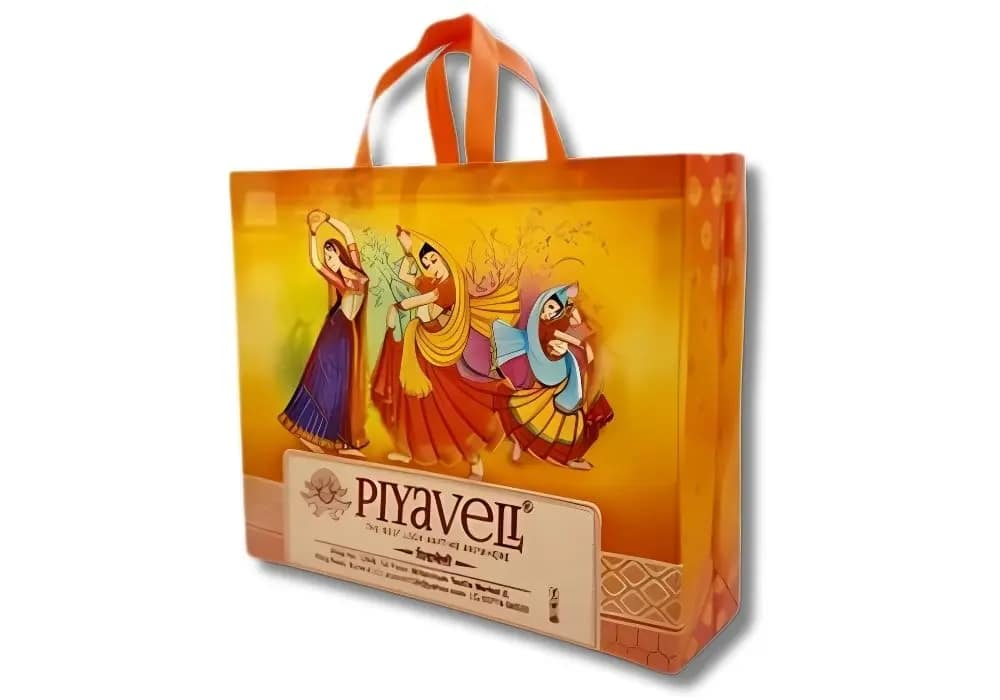
Here’s the part that convinces most shop owners to stay with non-woven long after the plastic ban pushed them into it: a printed bag doesn’t stop working once the customer leaves the shop. Every time that same bag is reused – for another shopping trip, to carry lunch, to store things at home – your shop’s name and logo travel with it. That’s what makes branded carry bags genuinely different from a plain plastic bag, which usually gets thrown away within a day and carries no branding value beyond the first use.
For a small business without a marketing budget, this is a low-cost, repeating form of visibility. We’ve had customers order the same design across multiple bag types – a D-cut range for daily counter use and a laminated range for festival season – precisely because they want their branding consistent across every touchpoint a customer sees.
Retailers Need Bags That Match Different Products
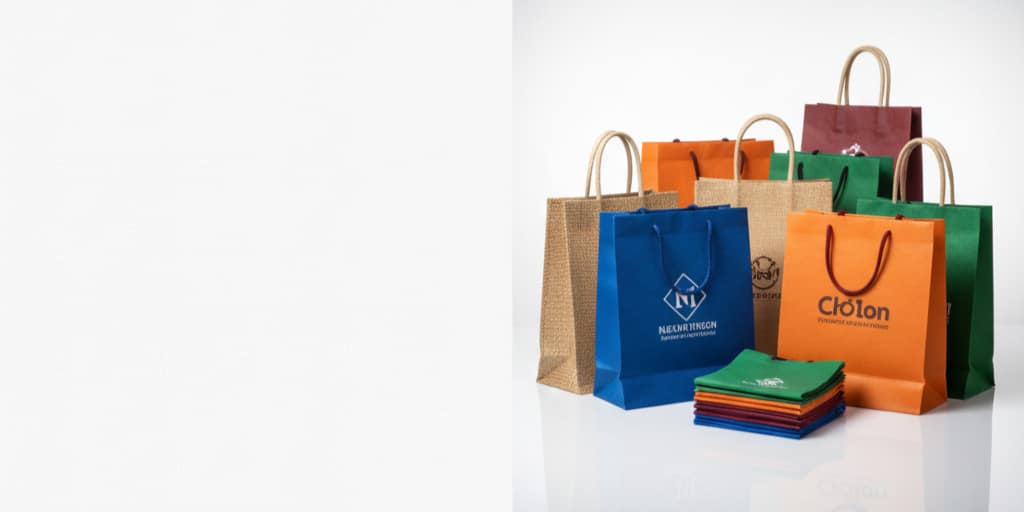
Not every shop needs the same bag. A jewellery counter and a grocery store have completely different requirements, even though both are technically “retail.” This is why retail store bags aren’t a single product – they range across GSM, cut, and finish depending on what’s being carried.
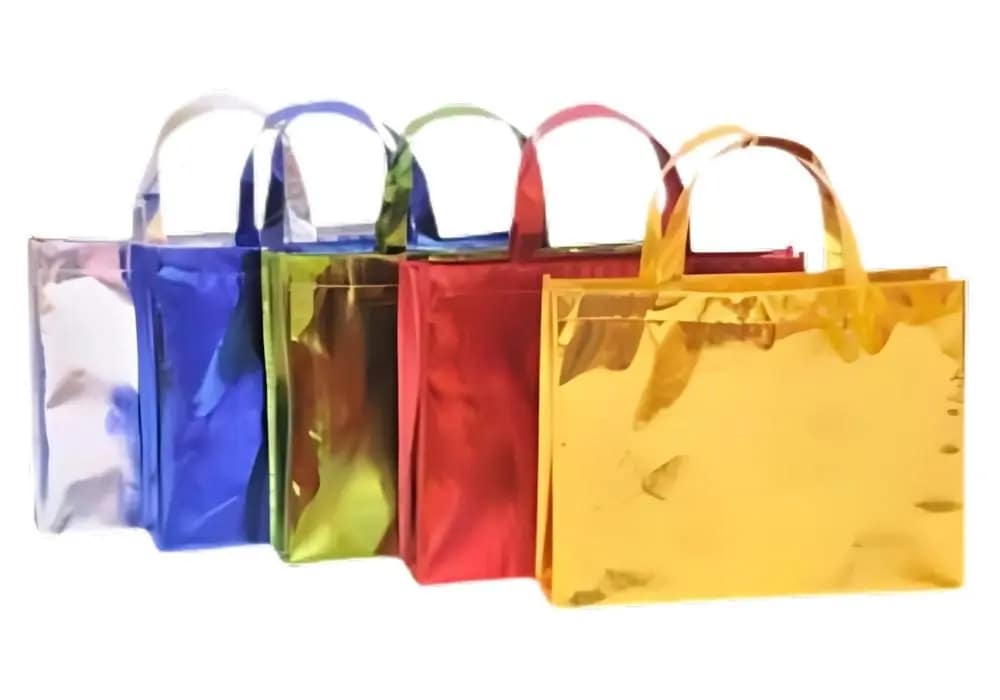
At Unique Bags, this shows up in the way we take orders. A telecom store handing out a small accessory needs a lighter bag than a garment shop packing a full outfit. A jewellery counter cares more about finish and print quality than about carrying capacity, since the item inside is small but the presentation matters. We manufacture across a 30 to 120 GSM range and offer D-cut, loop handle, and laminated styles specifically because retail isn’t one category – it’s dozens of different use cases under the same label.
Reusability Matters More to Retail Than People Assume
There’s a reason reusable retail bags have stuck around even in markets where enforcement of plastic bans is patchy – customers themselves have started expecting it. A shopper who’s used to carrying a sturdy printed bag home from one store starts noticing when another store hands them a flimsy alternative. Retailers who’ve made the switch early aren’t just complying with a rule; they’re meeting a customer expectation that’s slowly become the norm across urban and semi-urban India.
This also connects back to cost. A bag that survives multiple uses reduces the frequency at which a shop needs to restock its bag supply, which matters when you’re ordering in bulk. We see repeat orders from the same retail customers roughly in line with their footfall and how frequently their existing stock runs out – which tells us the bags are actually being used more than once by the end customer, not discarded immediately.
Customization Is Easier Than Retailers Expect
A common hesitation we hear from smaller retailers is that custom printing feels like it’s only for bigger brands. In practice, screen printing and flexographic printing on non-woven fabric can be done at a scale that fits a single shop’s order, not just a chain’s. The MOQ at Unique Bags starts at 500 KG, which sounds large as a number, but for a mid-sized retail shop ordering bags across a full season, it’s a quantity that gets used up steadily rather than sitting as excess stock.
This is also why so many retailers order more than one bag type in the same batch – a plain, lower-cost option for everyday use, and a printed, branded option specifically for higher-value purchases or gifting occasions.
What This Means If You’re Switching for the First Time
If you’re a retailer moving away from plastic and deciding on your first non-woven order, here’s what tends to matter most based on what we see across categories:
- Match the GSM to your product weight– don’t over-order a heavier, costlier bag than your product needs.
- Decide early if branding matters to you– if it does, factor in printing costs from the start rather than switching later.
- Consider more than one bag style if your shop sells a mix of light and heavy items.
- Order in a quantity that matches your actual footfall, not just what sounds like a round number.
The Real Reason Retail Has Settled on Non-Woven
Retail stores didn’t adopt non-woven bags because they’re trendy – they adopted them because the bag solves multiple problems at once: legal compliance, repeat branding exposure, and a cost structure that improves the more the bag gets reused. That combination is difficult to match with any other packaging material at a similar price point, which is why the shift has held steady rather than reversing once enforcement eased in some states.
If you’re weighing this switch for your own shop, the conversation we’d have with you is the same one we have with every retail customer – what’s the product, what’s the counter, and what’s the budget? That’s what decides the right bag, not a generic recommendation. Reach us at 8887995604 to talk through it.
Frequently Asked Questions
1. Why did retail stores start using non-woven bags instead of plastic?
Primarily due to plastic-ban regulations in various Indian states, combined with the fact that non-woven bags can be reused, unlike single-use plastic.
2. Are non-woven bags more expensive than plastic bags?
The per-piece cost is generally higher, but since the bag gets reused by customers, the effective cost-per-use works out lower over time.
3. Does branding on a bag actually help a small retail shop?
Yes, since the bag is reused by the customer multiple times, the branding gets repeated visibility beyond the initial purchase, at no extra cost per reuse.
4. What GSM is recommended for a general retail shop?
It depends on the product being carried – lighter items can use a lower GSM, while heavier retail goods need a higher GSM for durability.
5. Can a small shop order custom printed bags, or is that only for big brands?
Custom printing is accessible at a shop level too – the MOQ at Unique Bags starts at 500 KG, which is manageable for a season’s worth of stock for most retail shops.
6. Do different retail categories need different bag types?
Yes, a jewellery counter, a garment shop, and a grocery store typically need different GSM, cut, and finish based on what they’re packaging.
7. How often should a retail shop reorder non-woven bags?
This depends on footfall and how quickly existing stock is used – higher footfall shops typically reorder more frequently.
8. What’s the benefit of ordering more than one bag style?
Many retailers use a lower-cost option for daily use and a premium or laminated option for gifting or festive occasions, under the same branding.
9. Is printing available on all types of non-woven bags?
Yes, D-cut, loop handle, and laminated bags can all be printed using screen or flexographic printing methods.
10. How can a retailer place a bulk order with Unique Bags?
Retailers can contact Unique Bags directly at 8887995604 to discuss product type, GSM, and quantity based on their specific counter needs.