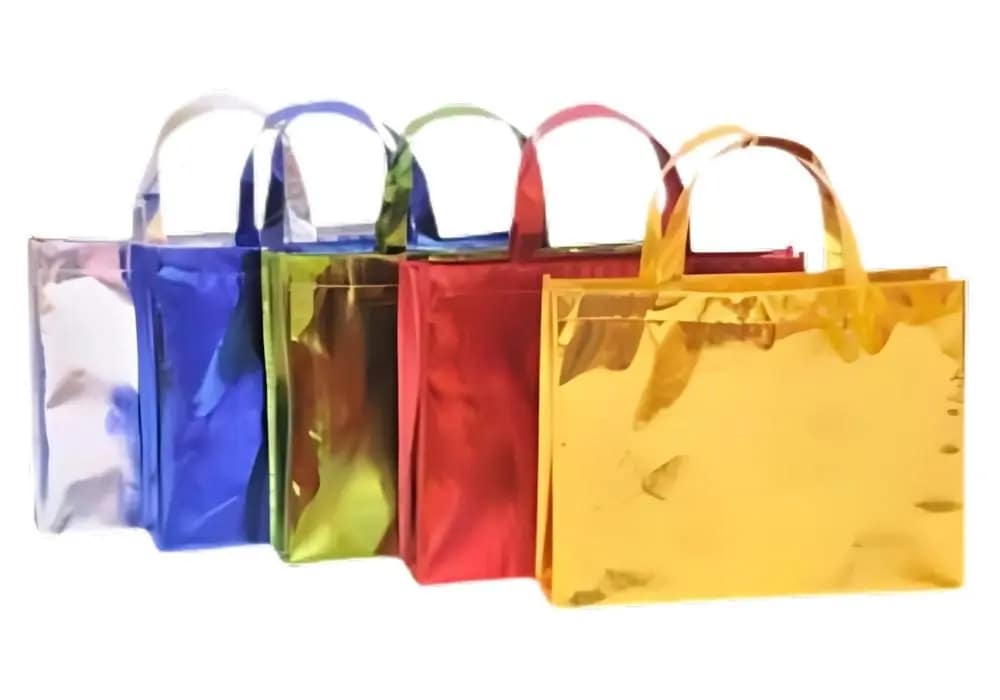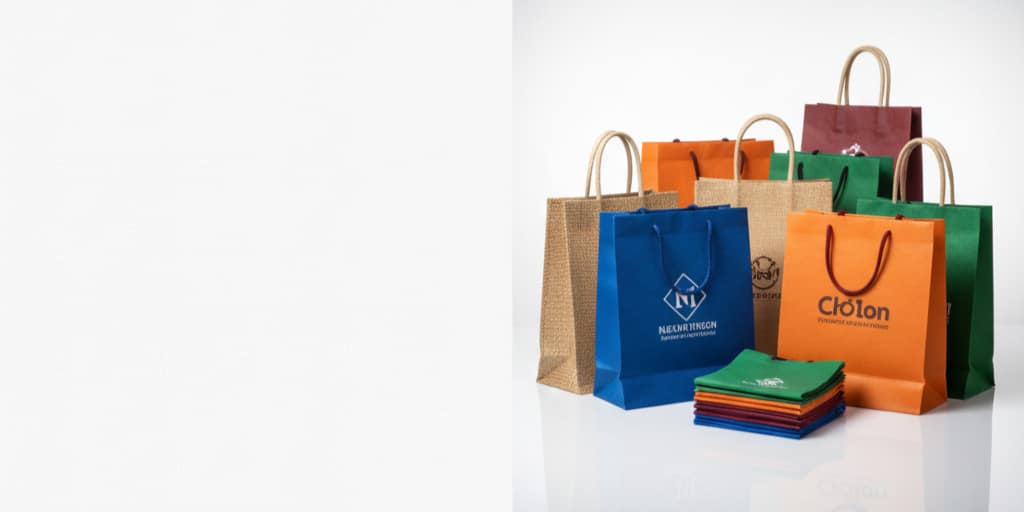
There are several issues that need to be considered carefully while conducting retail business today. In particular, modern retailers have to comply with strict restrictions on single-use plastic packages, which implies finding alternatives. Paper shopping bags tend to tear apart once they get wet, and cotton totes are simply too pricey for mass usage in retail business. Thus, non-woven carry bags seem to become the most practical option for retail businesses, logistics, and food delivery companies.
The Concept of Non-Woven Fabric
The technology behind this fabric should be clarified in order to comprehend its advantages. Unlike regular textile fabrics, which have to go through processes such as spinning and weaving, non-woven fabric is produced using mechanical or thermal engineering.
The most commonly used technique employs Spunbond technology. PP granules are first liquefied and transformed into very fine, long fibers using an extrusion technique. These crude fibers are then applied randomly on a conveyor belt and passed through heated rollers or calender to bind the fiber molecules together thermally, forming a textile-like sheet. This production system does away with costly weaving, providing manufacturers with lightweight, high-tensile fabrics at a fraction of the cost of woven materials.
Structural Integrity and Weight Carrying Capacity (The importance of GSM)
The carrying capacity of a packaging bag in relation to the buyer depends on its weight per unit area, known as grams per square meter (GSM). Knowing GSM levels will help you select a bag appropriate for the nature of your merchandise.
- 60 GSM to 70 GSM: lightweight. This is the minimum level set according to law in many countries, suitable for stores specializing in clothing, boutique shops, and giveaways.
- 80 GSM to 100 GSM: moderate weight. This range provides the best compromise between flex and tear-resistance and is highly recommended for shoes, books, etc.
- 120 GSM and Above: Industrial Grade. The thick material is made specifically to withstand heavy, sharp, or large loads, making it ideal for use in supermarkets, hardware stores, and home goods stores.
The major benefit offered by using non-woven materials is that they do not tear off in case of punctures. In case there are small tears from a sharp object, such as a box’s corner, the filament material will still maintain its integrity while in transit.
Managing Plastic Carry Bag Codes
Some local administrations have issued certain modifications to the Plastic Waste Management Rules regarding the strict minimum thickness standards. These rules include the standard for non-woven carry bags that should be not less than 60 GSM. The purpose of these guidelines is to guarantee that the bags will be durable enough and reusable, unlike the previously banned plastic products. Adhering to the required bag specification prevents any form of legal or financial complications for retailers.
Cost-Effectiveness and Bulk Ordering Supply Chain
When purchasing packaging in bulk, it is always advisable to consider profit margins. Although the non-woven bags cost a little bit more than the forbidden ultra-thin plastic bag, they offer much better cost-effectiveness when compared with other alternative materials:
Moreover, non-woven bags are highly compressible and can be shipped in large quantities without occupying much space. Stores are able to stack thousands of such bags underneath the counter or in a small storage room, thus saving on warehouse and transportation fees. Commercial buyers can get access to wholesale catalogs and customized layouts at uniquebags. in.
Make Packaging Speak Its Mind
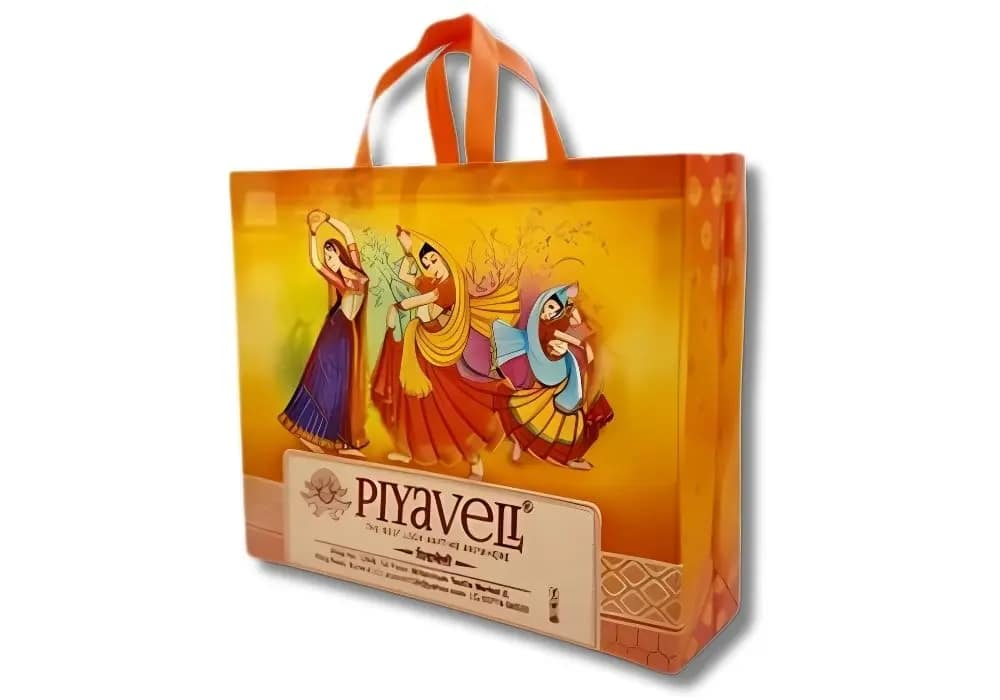
From the point of view of marketing, all bags taken away by customers from the retail store become good promotion tools. Non-woven bags can make perfect printed advertising carriers as the bonded plastics lend themselves very well to flexographic and rotogravure printing.
Most governments have changed their rules regarding Plastic Waste Management and now have minimum thickness requirements. For instance, non-woven carry bags should weigh at least 60 GSM. This helps distinguish code-compliant plastic bags from banned single-use plastics because the latter can only be used once before disposal.
Due to their durability to be used multiple times for shopping, workouts, and everyday errands, the logos, colors, and messages of your business will remain visible to consumers even weeks or months after the initial purchase. Your one-time investment in such bags would then serve as an ongoing, affordable way to market your company for many years to come.
Everyday Supermarket and Grocery Operations
In any busy supermarket, speed during checkouts is critical. While paper bags can rip easily, thinner plastic bags tend to get entangled during the checkout process.
Non-woven bags include a squared bottom that allows them to stand steadily on the packing counter for easier filling. Also, because non-woven bags have robust, broad handles either stitched by ultrasonic heat sealing or cross stitching, they are not likely to hurt the shoppers when lifted up.
Environmental Footprint & Circular Economy
It is only in its reuse capability that the sustainability of a packing material lies. Research done by the Central Institute of Petrochemicals Engineering and Technology (CIPET) has proven that low-grade materials like 40 GSM tear and distort quickly, but those manufactured in 60 GSM and above withstand several heavy uses without compromising their structure.
Polypropylene is environmentally friendly due to the inertness of this polymer; it does not have the ability to pollute the environment since it will not decompose if left in the soil. However, the most significant property of this material is that it can be completely recycled. After reaching its end of its lifespan, a new non-woven bag will be formed out of the pellets.
Frequently Asked Questions
What are non-woven carry bags made of?
The non-woven carry bag is basically made of a thermoplastic polymer known as Polypropylene (PP). Non-woven bags are manufactured by a method where a molten polymer is extruded from an apparatus, forming thin fibers that are bonded together using heat and pressure without the need for any weaving process.
What does GSM stand for in retail packaging?
It stands for Grams per Square Meter. It is a measure of how thick and dense the non-woven fabric used to make the bags is. This is because the higher the GSM value, the thicker the fabric of the non-woven carrier bags would become and consequently, the heavier their capacity.
Are non-woven carry bags prohibited according to plastic regulations?
No, only if the minimum weight requirement is met. The government has laws that permit the use of such bags as long as their GSM value is not below 60.
Which is preferred between non-woven polypropylene bags and paper bags when transporting supermarket purchases?
The first one is more durable since its fibers are naturally waterproof and tearproof. In contrast to paper that is easily destroyed by moisture and condensation, non-woven polypropylene does not weaken under similar conditions. It can withstand more weight and be used for several months.
Is it possible to produce bags with multicolored logos for retailers’ needs?
Yes, as the material is suitable for screen printing, flexographic printing, and Bopp lamination. Due to the possibility of creating colorful graphics, all bags will become unique and useful in terms of marketing.
What is the number of reuses that customers can achieve while using standard 60 GSM non-woven bags?
60 GSM non-woven bags are intended to last for dozens of reuses. In case of proper use, these products can serve up to a hundred visits to shops.
Recyclability of the Bags After Their Functional Period?
Yes, the nonwoven polypropylene bags are completely recyclable because these bags can be collected and shredded into small pieces that will then be melted down to make new plastic materials used to manufacture industrial products.
Where Can Corporate Packaging Buyers Purchase Customized Non-Woven Bags in bulk quantities?
Corporate purchasers, retail buyers, and procurement officials can find opportunities to customize non-woven polypropylene bags, see material samples, and buy large quantities at uniquebags.in
Service Area: Unique Bags is a trusted non-woven bags manufacturer in Kanpur, proudly supplying premium-quality eco-friendly carry bags to businesses across Kanpur, Lucknow, Delhi, Noida, Agra, Varanasi, Jaipur, Mumbai, Ahmedabad, and Kolkata, with reliable PAN India delivery. Whether you need D Cut Non Woven Bags, Printed D Cut Non Woven Bags, Loop Handle Non Woven Bags, Printed Loop Handle Bags, Laminated Non Woven Bags, Laminated D Cut Non Woven Bags, Laminated Loop Handle Box Bags (BOPP), Printed Laminated Non Woven Bags, or Non Woven Fabric Rolls, we provide fully customizable solutions in various GSM, sizes, colors, and printing options. From retail stores, garment shops, supermarkets, bakeries, jewelry stores, hospitals, and corporate promotions to exhibitions and branding campaigns, our durable and reusable non-woven bags are designed to enhance your brand while supporting sustainable packaging. With bulk manufacturing capabilities, competitive pricing, and timely nationwide logistics, Unique Bags has become the preferred choice for businesses looking for high-quality non-woven carry bags anywhere in India.