“What’s your price per piece?” is usually the first question we get on a call at Unique Bags, and it’s also the hardest one to answer honestly without more information. Non-woven bag pricing isn’t a single number – it moves based on several factors that change from one order to the next. Instead of quoting a generic figure that wouldn’t actually apply to most businesses, here’s a breakdown of what genuinely drives non-woven bag prices up or down, so you know what to ask about before requesting a quote.
GSM Is the Single Biggest Driver of Cost
More than any other factor, GSM – the weight and density of the fabric – determines your base cost per bag. A lighter GSM uses less raw material per bag, which brings the cost down, while a heavier GSM, built for durability and heavier loads, naturally costs more per piece. This is why we always ask about your product and expected use case before quoting anything, since recommending a GSM that’s heavier than you actually need inflates your cost without adding real value, and recommending one that’s too light can lead to a bag that underperforms and needs reordering.
At Unique Bags, our GSM range runs from 30 to 120, and the right point on that range for your business depends entirely on what you’re packing and how much durability you actually need-not on picking the cheapest or the strongest option by default.
Bag Type and Handle Construction Add to the Cost
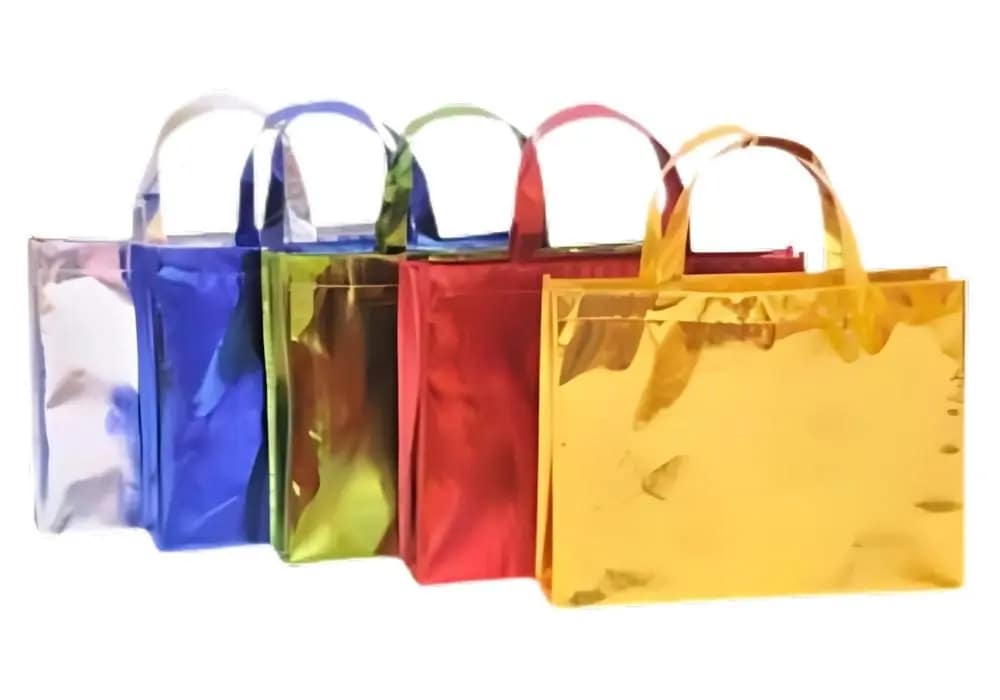
Wholesale bag cost also shifts based on the bag type you choose. D-cut bags are generally the most economical option, since the handle is cut directly into the bag body without needing separate stitching. Loop handle bags cost more, because the stitched handle requires an additional manufacturing step. Laminated bags sit at the higher end of the range, since they include an added BOPP layer for a glossy finish and better durability, which adds both material and processing cost compared to a plain non-woven bag.
This is why we always walk new customers through the trade-off between these types rather than just quoting the cheapest option outright – a D-cut bag might reduce cost significantly, but if your product needs the sturdier handle of a loop handle bag or the durability of lamination, going with the cheaper option can end up costing more in reorders or customer dissatisfaction down the line.
Custom Printing Changes the Cost Structure
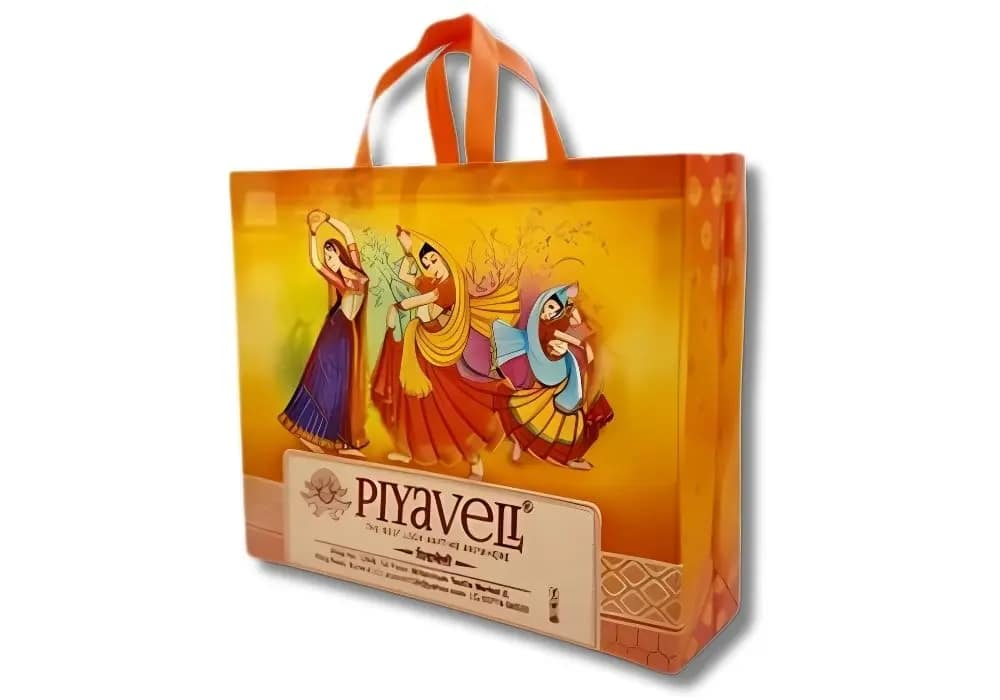
If your order includes branding, custom printed bag pricing depends on a few additional factors beyond the base bag cost – the number of colours in your design, whether you choose screen printing or flexographic printing, and how large or detailed the print area is. A simple, single-colour logo printed via screen printing generally costs less than a multi-colour, detailed design requiring flexographic printing, since the more complex process typically involves more setup and material.
This is also where a proof or sample stage matters for cost control, not just quality – approving your design before a full production run avoids the more expensive mistake of discovering a colour or placement issue after your entire batch has already been printed.
Order Volume Directly Affects Your Per-Piece Rate
Bulk bag pricing works the way most manufacturing pricing does – the per-piece cost decreases as your order volume increases, since production costs like setup, machine time, and material sourcing get spread across a larger batch. This is one of the main reasons businesses move from small, retail-style purchases to bulk ordering once their usage justifies it.
At Unique Bags, our MOQ starts at 500 KG, and pricing typically improves further as volume increases beyond that starting point. That said, ordering more than your actual usage just to chase a lower per-piece rate can backfire – unused stock sitting in storage erodes the savings you were trying to capture in the first place, so it’s worth sizing your order against realistic consumption rather than the lowest theoretical price point.
Understanding the Manufacturing Process Behind the Price
A large part of what businesses are actually paying for is the underlying manufacturing cost-raw material sourcing, in-house production capacity, quality checks, and the labour involved in stitching, cutting, and printing. Suppliers who manufacture in-house, like we do at Unique Bags, have more direct control over this cost structure compared to resellers who add a margin on top of a third-party manufacturer’s price. This is part of why comparing quotes purely on the final number can be misleading – two suppliers quoting a similar price might be offering very different levels of quality control, consistency, and after-sales support behind that number.
Why the Cheapest Quote Isn’t Always the Best Value
It’s very tempting to go for a supplier who gives you the cheapest printed paper bag quote. However, this price point fails to take into consideration the points raised above. Often the reason for a price that appears low is due to the GSM being less weighty than you required, inferior handle attachment, and more critically, a print method ill-suited to your chosen bag design and artwork.
The better way to approach your decision is not to ask “what’s the cheapest price”, but to ask “what specification is fit for purpose, and at what price”. A higher per-unit cost is often far better value, if it gets you a bag that performs better and won’t fall apart prematurely.
What to Clarify Before Comparing Quotes
If you’re comparing pricing across suppliers, make sure you’re comparing the same specification, not just the same number:
- Confirm the exact GSM being quoted, since a lower price often means a lighter GSM.
- Check the bag type – D-cut, loop handle, and laminated options aren’t interchangeable in cost or performance.
- Clarify printing method and colour count if your order includes branding.
- Ask about the quantity break points – pricing often changes at different volume tiers, not just at the MOQ.
- Ask whether the supplier manufactures in-house, since this affects both cost transparency and quality consistency.
The Bottom Line on Pricing
We all want to price without complexity! Non-woven bags aren’t one-size-fits-all when it comes to pricing: cost varies with GSM, bag construction type, printing detail, quantity, etc. And the manufacturing process (and its nuances)
A much safer method is to consider your exact item and its applications, and have a quote built around it – don’t base comparisons on supplier-to-supplier per-piece price quotes and wonder why the numbers never match up! Let’s give you a definitive, specification-based quote for your use – Just call us: 8887995604, and we’ll talk you through it to a spec pricing result.
Frequently Asked Questions
1. Why are non-woven bag prices between different suppliers so different?
That can happen due to differing GSM, type of bags, print complexities, and total quantity ordered, so while two quotations at different prices may sound like they reflect two different profit margins, it can also very easily just be very different specs entirely.
2. Does Higher GSM = Higher Price?
Mostly. Higher GSM will use up more raw material for each bag; thus, more raw material used will result in higher production cost for that specific size (gsm of non-woven).
3. What is The Cheaper Bag Type?
A D-Cut bag type is generally the cheapest because you get a handle without much extra attachment costs, as the handles are part of the bag design itself.
4. How Will Printing Impact the Cost?
Depends on factors like the number of colours used, the size of the Print, and screen printing vs. flexography; detailed printed Designs would, of course, cost more.
5. Will Higher Quantity Help me reduce my per piece cost?
Of course! Higher order quantity typically reduces per piece cost for everyone. However, we suggest ordering the number of bags you would ideally need, as ordering merely for the sake of getting lower per piece costs and not utilising them can prove more cost-ineffective in the long run.
6. What is the Minimum Order quantity required, which impacts pricing for Unique Bags?
500 KG and prices further get better if order volume is beyond 500 KG.
7. Is A laminated bag is the costly in terms of cost than Plain Non-woven bag?
Plain non-woven is cheaper amongst both kinds; laminated bags come at a higher production cost due to the lamination process over non-woven fabric to give a more durable look.
8. Why Shouldn’t I go for the supplier with the lowest quotation?
A low quotation may represent the use of a lighter GSM of non-woven fabric for the bag, a different and weaker handle construction type, or a printing procedure that wouldn’t suit the kind of designing that you might have in mind for your bags. This might result in additional costs in the form of repeated orders from another manufacturer or customer dissatisfaction for an un-durable product.
9. Does it cost less if Bags are manufactured in-house (unique bags manufacturing) rather than bought from a reseller?
Manufacturers like Unique Bags offer to make your custom shopping Bags from their premises, so there are many benefits, including better quality control and transparent pricing, compared to the reseller, who already has a margin over them from the manufacturer’s quotation to you.
10. How can I get an estimated Price for my bags for my business?
Call us at 8887995604 for a quote – “I need a Quote for my business”.