The worldwide trend toward sustainability is not some distant projection in the future-rather, it is a present-day commercial reality. In retailing, business logistics, and marketing, the demand for phasing out one-time-use plastics has grown. For large purchasers, commercial retailers, and growing brands, customized reusable packages are not merely items needed to meet compliance; rather, they are customer experience points and key aspects of their brand identity.
Among all eco-friendly packaging products available, NWPP bags have emerged as the best option. Such products are strong, can be customized, cheap, and entirely recyclable. However, the effectiveness of the package will depend largely on who will manufacture it for you.
Partnering with an unreliable manufacturing company could result in package structures prone to breaking, misprinted logos, and delayed shipments that will ruin a retail launch altogether. This guide provides a list of the specific considerations to be made when searching for a non-woven bag manufacturer.
Production Capability and Scalability
In regard to large-scale businesses and retail stores, a supplier’s production capabilities become equally important as its pricing structure. Where any unforeseen increase in demand arises or while embarking on a massive campaign for the upcoming season, it becomes necessary to have a good manufacturing company that can cater to your requirements.
While making the decision to tie up with a supplier in a long-term partnership, make sure you know the dimensions of their factory premises, the type of machines, and the rate of production.
Any experienced company manufacturing non-woven bags should be fully automated with regard to cutting, sealing, and fixing of loops. Otherwise, one can expect low-quality stitches, easily torn handles, and delays in manufacturing processes.
Sophisticated Printing and Protection of Your Brand Identity
Retail packaging acts as a walking billboard for your brand name. Thousands of people carrying bags featuring your logo in shopping malls and on city streets will associate the quality of the printing with the overall image of the brand. The poor execution of the print job can damage the brand’s reputation and image, especially when dealing with premium and upscale brands.
While selecting a printer, consider using two key techniques:
- Screen printing: This technique would be best suited to work with logos that are not complicated but rather feature fewer colors and are characterized by contrast. It is extremely cost-effective and efficient in dealing with bulk product volumes.
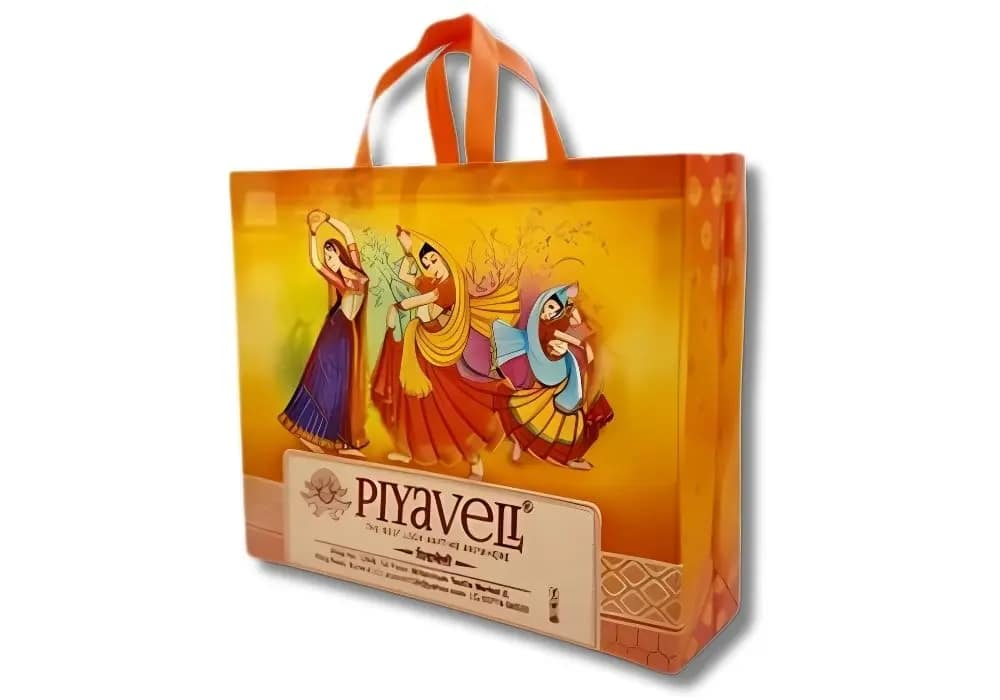
- Rotogravure/BOPP Laminated Printing Services: In case of complicated graphics, photographs, and color printing, you should go for companies that offer services in Rotogravure printing and Biaxially Oriented Polypropylene Laminating. It includes the process of transferring a fine printed film onto nonwoven fabric.
Before initiating any production, you should always seek out samples to test the quality of their work in relation to your brand requirements.
Rigid Quality Assurance Procedures
If you pay less per unit, it won’t matter much if a substantial portion of your order comes with structural flaws. Sorting out issues like detaching handles, weak bottom seams, or irregular material thickness is frustrating and drains away the budget.
Any competent manufacturing facility must rigidly adhere to the Quality Assurance (QA) procedures in its assembly line:
- Verification of Grammage & Material Density: Checking whether the material is the same as the ordered one, with a density between 60 GSM and 120+ GSM.
- Tests for Tensile Strength: Checking the strength of the handle and seams, making sure that the bags don’t tear when carrying their stated capacity.
- Audit of Dimensions and Alignment: Making sure that all dimensions of the bag, the depth of its gussets, and the placement of prints align with the digital proof.
Real Customization & Design Possibilities
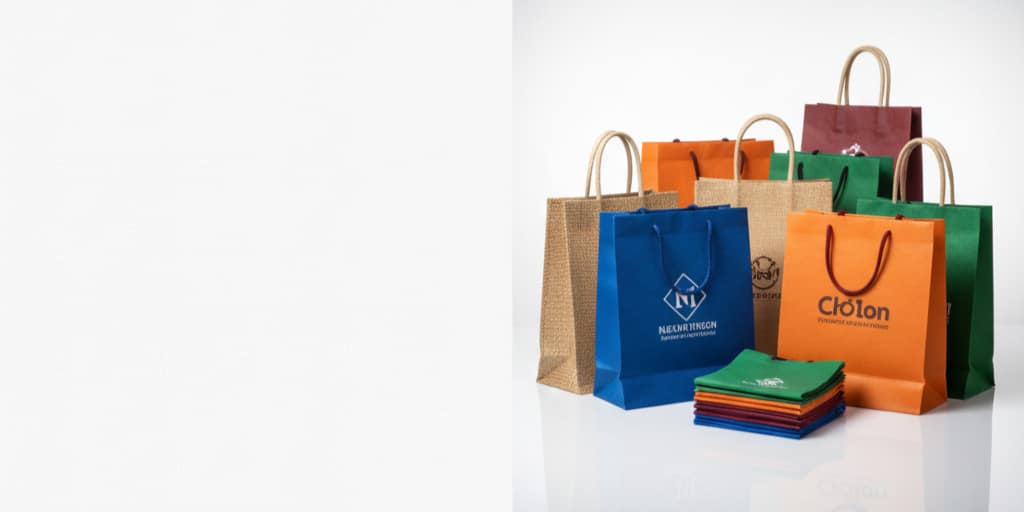
Each company needs its own packaging design that suits its products well. Grocery store chains will require bigger, heavier GSM bags capable of carrying bulky items, while luxury item manufacturers or cosmetic companies would go for small-sized, compact bags with unique matte finishes or specific closure fastenings.
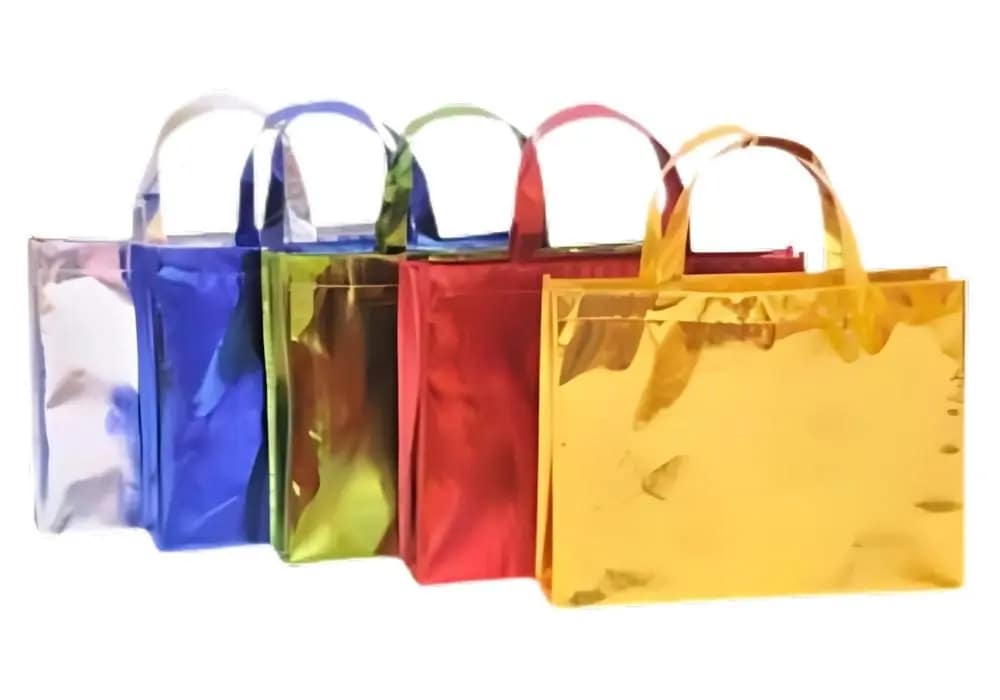
Make sure that the supplier you choose has flexibility in designing structural shapes, handle types such as the D-cut, W-cut, soft loop, or shoulder-length straps, as well as other finishings. Using a manufacturer who insists on using a set pattern will inevitably reduce your range of design choices.
Pricing and Minimum Order Quantities (MOQs)
For bulk commercial purchases, even small differences in prices per unit become considerable amounts of money. To avoid being caught off guard when it comes to prices and fees, it is recommended that you acquire clear details from your account manager regarding the cost involved in your order.
Below is a checklist of cost breakdown items that you will need to ask and verify from your manufacturer/supplier:
- Cost of Grammage: Base price of non-woven fabric based on specified GSM requirement.
- Cost of Tooling and Cylinders: One-time cost of producing customized printing plates or rotogravure cylinders.
- Shipping Fees: Cost for delivery and shipping purposes, including whether the fee covers FOB or DDP shipping rates.
Lastly, you should watch out for the MOQ, as it varies per factory. Large production plants can afford to reduce costs per unit, but you have to make sure that their minimum order quantities match your procurement plans.
Ensure a Secure Pipeline of Packaging Materials
Selecting the appropriate manufacturer for your packaging is investing in both a secure and efficient supply chain and investing in the way your company’s brand identity will come across via its packaging. If you are looking for bulk quantities of reusable bags, then be sure to check out all the possibilities that Unique Bags has to offer.
Frequently Asked Questions
1. What elements affect the price for non-woven bags custom orders?
There are several aspects that affect the cost of a single unit of non-woven bag, including fabric GSM, size, handle type, number of colors, and need for a BOPP film laminated printed design, and also the order volume. Wholesale orders ensure a reduction in price per unit due to the distribution of fixed expenses.
2. How can I pick out the appropriate weight (GSM) for my business needs?
GSM refers to grams per square meter and describes fabric thickness. For lightweight clothing and products, and also for promotional events, light GSM (60-70 GSM) is recommended. The regular choices for retail checkout will be moderate GSM (75-90 GSM). If heavy goods such as grocery products, electronics, and premium multi-use branded corporate gift products need to be transported, heavy-duty GSM (100-120+ GSM) must be selected.
3. What is the time frame for production and delivery of large-volume orders?
Timeframe dynamics largely depend upon the specifics of the order and its size. The production of standard bulk orders with a reputable non-woven bags manufacturer takes from 10 to 15 working days after approval of the design in electronic format. Delivery will depend on your choice of local transportation, air, or sea cargo.
4. Is it possible to create exact color replication by the manufacturer?
Yes, experienced manufacturers can formulate their ink based on your brand colors. In case of necessity of an exact color replication, photographic gradients, and full-bleed design, you should prefer rotogravure printing coupled with BOPP lamination instead of surface screen printing.
6. In what ways is an automated plant superior to manually assembled facilities regarding bulk purchases?
The automated process of manufacturing involves ultrasonic welding and robotic cuts at high speeds. This process guarantees uniformity since it does not involve any human error; therefore, all handle welds, side seams, and dimensions will be similar in thousands of pieces.
7. What actions can a company take to properly evaluate a prospective supplier before a purchase?
Firstly, it is necessary to request the sample set that showcases different fabrics, handle types, and printing methods. After that, a business should ask for an itemized digital proof and a physical model of your bag for inspection purposes.
8. Are there options for treating non-woven bags with a special finish?
Certainly. Apart from the typical matt or gloss coating using BOPP lamination, non-woven bags made by an advanced manufacturing company have options for applying additional finishes that provide a luxurious look similar to retail boutiques.
Service Area: Unique Bags is a trusted non-woven bags manufacturer in Kanpur, proudly supplying premium-quality eco-friendly carry bags to businesses across Kanpur, Lucknow, Delhi, Noida, Agra, Varanasi, Jaipur, Mumbai, Ahmedabad, and Kolkata, with reliable PAN India delivery. Whether you need D Cut Non Woven Bags, Printed D Cut Non Woven Bags, Loop Handle Non Woven Bags, Printed Loop Handle Bags, Laminated Non Woven Bags, Laminated D Cut Non Woven Bags, Laminated Loop Handle Box Bags (BOPP), Printed Laminated Non Woven Bags, or Non Woven Fabric Rolls, we provide fully customizable solutions in various GSM, sizes, colors, and printing options. From retail stores, garment shops, supermarkets, bakeries, jewelry stores, hospitals, and corporate promotions to exhibitions and branding campaigns, our durable and reusable non-woven bags are designed to enhance your brand while supporting sustainable packaging. With bulk manufacturing capabilities, competitive pricing, and timely nationwide logistics, Unique Bags has become the preferred choice for businesses looking for high-quality non-woven carry bags anywhere in India.