
The scene is changing very fast within the field of retail packaging in India. The current regulatory bans coupled with rising environmental consciousness from the consumer side means that owners of businesses have no option but to make a tough choice regarding packaging material. They are lightweight, reusable, recyclable, and highly printable.
But once you opt to embrace non-woven technology, you will be faced with a big decision: To get D-cut non-woven bags or go with loop handle bags?
Choosing the best kind of bags for use in retail depends fully on the nature of your merchandise, budgetary concerns, and branding considerations. This detailed analysis highlights the key distinctions between D-cut and loop handle bags in the retail industry.
D-Cut vs Loop Handle Non-Woven Bags
Design Variations and Applications
It is important to understand the physical construction of both types of non-woven type bags to determine which design would be most suitable for a busy shopping experience.
D-Cut Non-Woven Bags
As can be inferred by its name, the d-cut bag gets its name because of the unique D-shaped hole cut out at the upper body of the fabric. Because the handle is part of the overall silhouette of the bag, there are no seams making its entire structure compact.
Customer Experience: The way customers will hold a d-cut bag is by gripping its body. In doing so, the customer’s grip will force the two ends closer together, resulting in securing any item placed inside, making it firm and stable inside.
Ideal Applications: This design is best suited for items that can fit in a flat position with no need for a bottom box gusset.
Loop Handle Bags
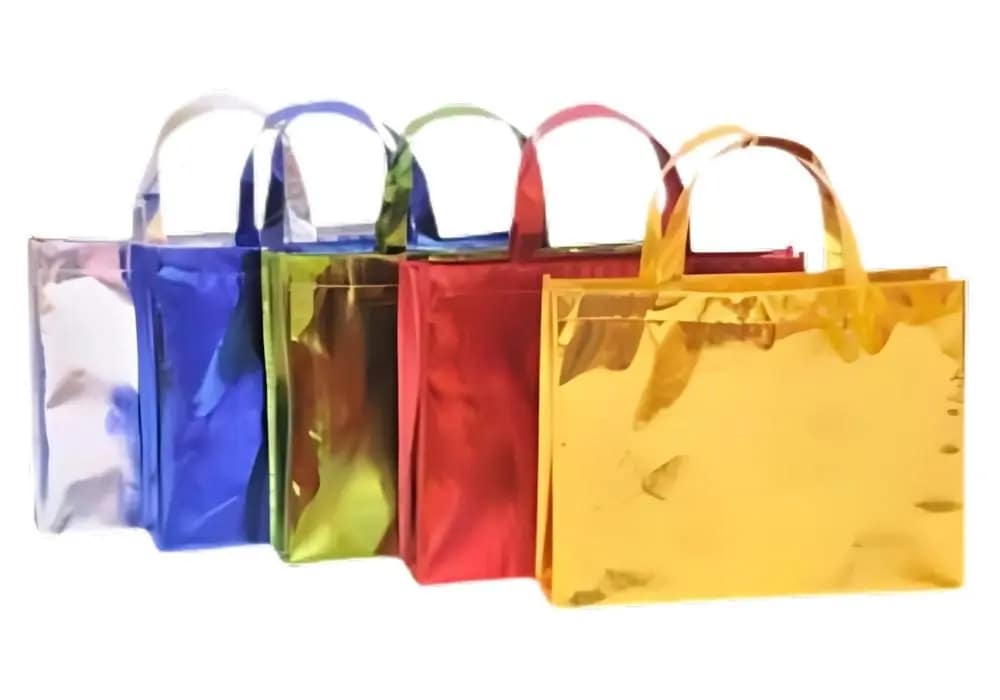
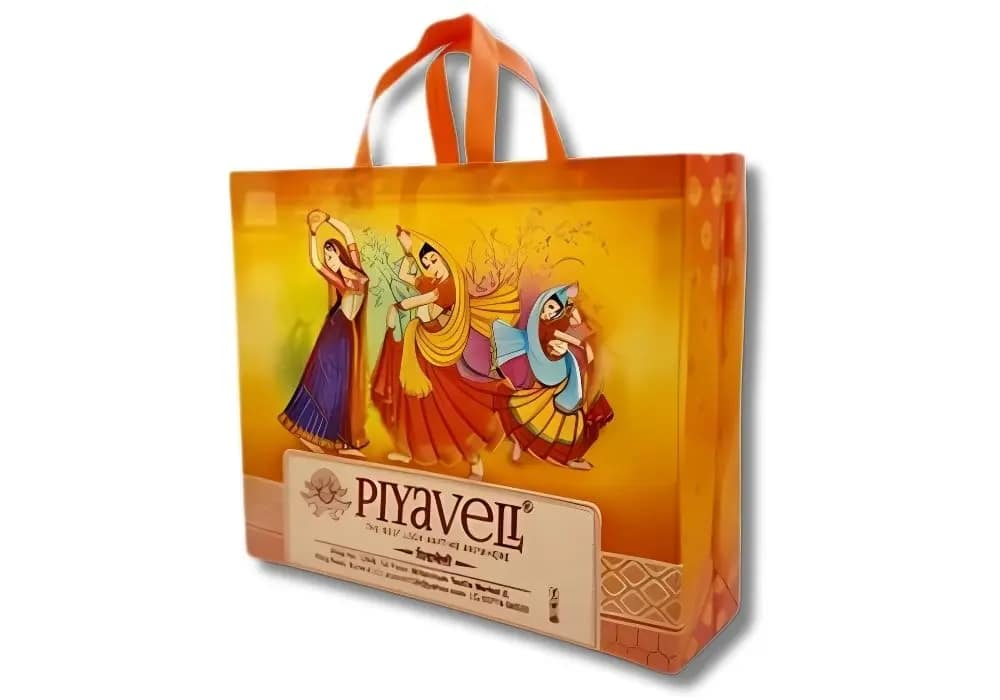
The body of the bag is most commonly made with side and bottom gussets to form a 3D box shape, while individual, flexible loops made out of non-woven material are attached using ultrasonic welding or stitching to the inside rim.
User Experience: The flexibility of these exterior loops makes carrying the bag comfortable and ergonomic. This allows shoppers to easily hook them around their wrists or forearms, leaving their hands free to carry keys, phones, and other items.
Use Cases: With their upright structure, these bags are ideal for wide, bulky, and multi-product purchases as they have a solid square base to support such contents.
Strength and Structural Durability Analysis
For maximum value from your investment, ensure that the thickness of the material is matched to the weight of your merchandise through GSM analysis.
| Bag Feature | D-Cut Non-Woven Bags | Loop Handle Bags |
| Handle Position | Cut directly out of the main fabric panel | Welded or stitched onto the top rim |
| Load Bearing Profile | Excellent vertical tension; risk of tearing if overstuffed wide | High volume capacity; load stress concentrated at the weld points |
| Recommended GSM | 40 GSM to 80 GSM | 70 GSM to 120+ GSM |
| Base Structure | Primarily flat or bottom seam; rarely side-gusseted | Full side and bottom box-style gussets |
Best Fitting Industries for Both Designs
The choice between both designs is largely dependent on the industry within which you carry out your retail business.
D-Cut Bag Industries
- Apparel & Textile Industry: T-shirts, folded jeans, and sarees can be placed properly in the D-cut bag and will not move inside.
- Healthcare & Pharmacy: Medical bottles, cosmetic jars, and wellness boxes can be placed properly in the small D-cut bag.
- Bookstores & Stationery Industry: Magazines, hardback books, and stationery can fit snugly into the flat sides of the D-cut bag.
- Footwear Industry: Flat sandal boxes and shoes can be placed properly in the larger D-cut bag.
Loop Handle Bags
- Premium Fashion Stores: The box-shaped design imitates luxury paper bags, contributing to the brand’s premium nature.
- Supermarkets and Food Chain Stores: The broad bottom gusset ensures space for stacks of plastic food containers, spices, and other goods.
- Confectionaries and Baking Stores: The flat-bottomed nature of loop handle bags ensures that boxes with cakes and pastries stay level, avoiding any spillage of icing or syrup.
- Electronics Shops: Boxes of electronic gadgets, including laptops and computer accessories, require a wide opening and large bottom, which is ensured by the loop handle design.
Branding and Personalization Possibilities
Both bag types function as great traveling billboards for your company as your clients move around carrying the bags in shopping malls or cities.
As D-cut bags remain flat during manufacturing, it becomes extremely convenient to use them as they can be fed quickly into high-speed printing machines such as screen and flexographic printing machines. Consequently, a vibrant multi-coloured logo or tagline can be printed on the front surface of the bag.
Loop Handle bag India gives you even more liberty to express yourself creatively. With their wide side panels, you will be able to put the logo on the front and back of the bags, and use the side panels to print information about your store location, QR codes, and other stuff related to your brand philosophy. Both types of bags can be equipped with different textured finishes. They include either glossy or matte BOPP lamination that creates water resistance, sharp graphics, and makes the bag more durable for months to come.
MOQ and Price Estimate
Handling the cost of your packaging production is not only about calculating how much you spend on each item but considering your MOQ.
Economics of D-Cut Bags: The production of D-cut bags uses fully automated and fast equipment to create bags with folded corners and punched handles. This manufacturing technique is highly effective and makes them quite affordable to produce. It means they are an outstanding bargain for startups or other small businesses producing orders in bulk quantities.
Economics of Loop Handle Bags: More work is involved in cutting, aligning, and welding the outer handle on the bag body, which obviously adds to costs. Further, suppliers would need larger MOQs because of the time involved in setting up machines for custom-made loop handles.
Frequently Asked Questions (FAQ)
What is the difference between D-cut and loop handle bags?
The basic distinguishing factor between the two types of bags is the design and construction of the handle. In a D-cut bag, the handle forms an oval shape, which is punched directly from the top part of the bag fabric and remains flat. In a loop handle bag, separate pieces are attached to the rim inside to create a hollow bag with large capacity, along with wide side and bottom gussets.
Which type of bags is most suitable for clothing stores?
If your store deals with everyday apparel, denim wear, and t-shirts, then the D-cut non-woven bags will prove to be a very economical choice. The clothes will remain flat and nicely packed. If you have a store selling premium ethnic wear, wedding dresses, or suits, you may need heavier GSM bags with loop handles for packing purposes.
Can loop handle bags be printed?
Yes, loop handle non-woven bags can be printed using various technologies including rotogravure, flexography, and silk screen printing techniques. Moreover, there can be a printing and lamination done on the surface of the bag, which gives it a professional finish like photographs or graphic designs on it.
Which GSM should I go for?
For buying D-cut bags to store light stuff such as clothes, books, and cosmetic products, a GSM between 70 and 80 would be best. In case you are using your bag to store heavy products such as food or electrical appliances, you will require a higher GSM ranging from 90 to 120.
Service Area: Unique Bags is a trusted non-woven bags manufacturer in Kanpur, proudly supplying premium-quality eco-friendly carry bags to businesses across Kanpur, Lucknow, Delhi, Noida, Agra, Varanasi, Jaipur, Mumbai, Ahmedabad, and Kolkata, with reliable PAN India delivery. Whether you need D Cut Non Woven Bags, Printed D Cut Non Woven Bags, Loop Handle Non Woven Bags, Printed Loop Handle Bags, Laminated Non Woven Bags, Laminated D Cut Non Woven Bags, Laminated Loop Handle Box Bags (BOPP), Printed Laminated Non Woven Bags, or Non Woven Fabric Rolls, we provide fully customizable solutions in various GSM, sizes, colors, and printing options. From retail stores, garment shops, supermarkets, bakeries, jewelry stores, hospitals, and corporate promotions to exhibitions and branding campaigns, our durable and reusable non-woven bags are designed to enhance your brand while supporting sustainable packaging. With bulk manufacturing capabilities, competitive pricing, and timely nationwide logistics, Unique Bags has become the preferred choice for businesses looking for high-quality non-woven carry bags anywhere in India.